
Call us now :07971191885
 Send Inquiry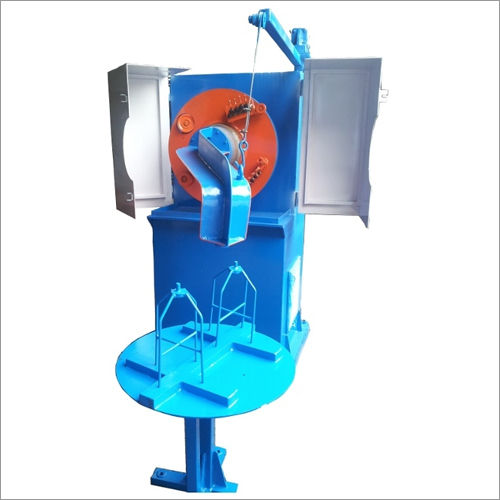
Dead Block Coilers
200000 INR/Unit
Product Details:
- Product Type Dead Block Coilers
- Wire Material Mild Steel, Carbon Steel, Copper, Aluminum, or as customized
- Voltage 380V/415V (customizable)
- Dimension (L*W*H) As per specific model or client requirement
- Usage Wire drawing and coiling operations in wire production plants
- Color Blue, Grey, or as specified
- Click to View more
X
Dead Block Coilers Price And Quantity
- 01 , , Unit
- 200000 INR/Unit
Dead Block Coilers Product Specifications
- As per specific model or client requirement
- Blue, Grey, or as specified
- Wire drawing and coiling operations in wire production plants
- Dead Block Coilers
- 380V/415V (customizable)
- Mild Steel, Carbon Steel, Copper, Aluminum, or as customized
- AC Electric Motor with Gear Reducer
- Water/Air Cooled Drum
- Floor Mounted with Levelers
- Up to 180 m/min
- 500 mm to 1000 mm
- 0C to 50C
- Suitable for steel plants, cable factories, wire rod mills, and metallurgy industries
- Automatic PLC Panel
- Heavy Duty Robust Frame
- Low; <65 dB
- Emergency Stop, Safety Covers, Overload Protection
Dead Block Coilers Trade Information
- 15 , , Unit Per Month
- 15 Days
Product Description
In order to fulfill the different preferences of clients, we are providing premium quality Dead Block Coiler Machine. Our offered machine is manufactured according to the set industry standards in our in-house production unit under the guidance of our dexterous professionals using premium quality components. The provided product is used for producing a large number of wires in desired specifications. We provide this Dead Block Coilers in different technical specifications to fulfill the various needs of our customers at industry leading price.
Features:
- Easy to operate
- Minimal maintenance
- High performance
- Rugged design
Product details
| Automation Grade | Automatic |
| Brand | AE |
| Capstan | 300 mm to 760 mm |
| Wire Range | 6 mm to 0.9 mm for all metals and alloys |
High-Efficiency Coiling for Industrial Wire Production
Our Dead Block Coilers are engineered for high-speed and precise wire coiling operations, suitable for intensive production environments. The wide drum diameter selection and customizable dimensions allow seamless integration into diverse manufacturing lines, supporting various wire materials. Operators benefit from robust performance, minimal maintenance, and consistently smooth wire coiling output.
Advanced Safety and Control Mechanisms
Equipped with an emergency stop button, safety covers, and overload protection, these coilers prioritize operator safety. The inclusion of a fully automatic PLC panel ensures reliable process control, making operations safer and more efficient. Maintenance teams appreciate easy access to critical components thanks to the coilers thoughtful design and modular construction.
Versatile Applications Across Multiple Industries
Designed for steel plants, wire rod mills, metallurgy, and cable factories, these coilers handle a diverse range of materials like mild steel, carbon steel, copper, and aluminum. The units support customized voltage and size configurations, enabling tailored integration into any production workflow within India and for export.
FAQs of Dead Block Coilers:
Q: How does the dead block coilers control system contribute to operational efficiency?
A: The automatic PLC panel precisely manages coiling speed, drum rotation, and safety features, enabling consistent performance and reducing manual intervention. This automation enhances overall process efficiency and product quality.Q: What wire materials can be processed using these dead block coilers?
A: These coilers are compatible with mild steel, carbon steel, copper, aluminum, and can be customized to handle additional wire materials as required by client specifications.Q: When should I consider using a water-cooled versus an air-cooled drum?
A: Water cooling is recommended for higher-speed or higher-temperature operations, ensuring efficient heat dissipation during intensive production. Air cooling is suitable for moderate or ambient temperature settings and helps maintain energy efficiency.Q: Where are dead block coilers typically installed?
A: They are floor mounted with adjustable levelers and are commonly found in steel plants, cable factories, wire rod mills, and other metallurgy industry facilities that require robust wire processing.Q: What is the process flow when operating a dead block coiler?
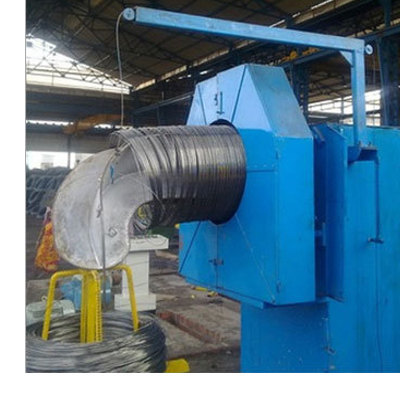
A: Wire is drawn onto the rotating drum, where the automatic control system regulates speed and tension. The cooled drum prevents material deformation, while integrated safety mechanisms protect operators and equipment throughout the coiling cycle.Q: How do safety features enhance workplace protection during operation?
A: The coiler includes emergency stops, overload protection, and comprehensive safety covers, reducing the risk of accidents and safeguarding both personnel and machinery during wire handling and coiling processes.Q: What benefits do users gain from the low noise and heavy-duty frame design?
A: Low noise levels (below 65 dB) create a safer, more comfortable workplace, while the heavy-duty robust frame ensures stability, longevity, and continuous performance under demanding production schedules.Tell us about your requirement

Price:
Quantity
Select Unit
- 50
- 100
- 200
- 250
- 500
- 1000+
Additional detail
Mobile number
Email

Other Products in 'Dead Block Coilers' category

 Send Inquiry
Our Products
- Wire Making Plant
- Wire Drawing Machines
- Wire Flattening Machine
- Dead Block Coilers
- Rod Breakdown Machine
- Wire Spooling Machine
- Nail Making Machine
- Galvanized Wire Plant
- Vertical Drop Coilers
- Wire Drawing Powder
- Black Binding Wire Making Machine
- Bull Block Wire Drawing Machine
- Binding Wire Machine
- Wire Pointing Machine

Plot No: 9, Girdharpur Road, G.T. Road, Lal Kuan,Ghaziabad - 201009, Uttar Pradesh, India

Mr. Deepak Tyagi
(proprietor)
Mobile :07971191885
 Send Inquiry
 Send SMS
Developed and Managed by Infocom Network Private Limited.
