
Call us now :07971191885
 Send Inquiry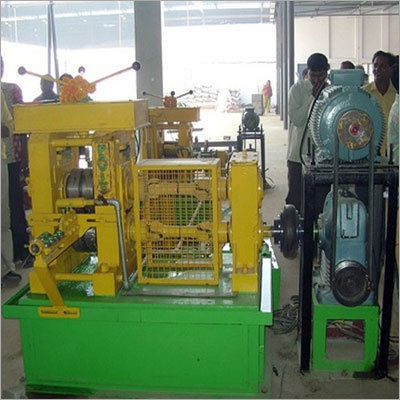
Rolling Wire Flattening Mill
200000 INR/Unit
Product Details:
- Product Type Rolling Wire Flattening Mill
- Inlet Diameter 1 mm to 10 mm
- Outlet Diameter 0.2 mm to 8 mm (adjustable)
- Power 5 HP to 30 HP (depending on model)
- Dimension (L*W*H) 2200 mm x 1300 mm x 1600 mm (approx)
- Usage Flattening and shaping round or irregular wires into flat or custom profiles for industrial applications
- Weight 1800 kg to 3500 kg (depending on model)
- Click to View more
X
Rolling Wire Flattening Mill Price And Quantity
- 200000 INR/Unit
- 01 , , Unit
Rolling Wire Flattening Mill Product Specifications
- Rolling Wire Flattening Mill
- 1800 kg to 3500 kg (depending on model)
- 2200 mm x 1300 mm x 1600 mm (approx)
- 5 HP to 30 HP (depending on model)
- 0.2 mm to 8 mm (adjustable)
- 1 mm to 10 mm
- Blue/White or as required
- Flattening and shaping round or irregular wires into flat or custom profiles for industrial applications
- Wire manufacturing, jewelry, electrical, automobile, and engineering industries
- Up to 25 meters/minute (variable)
- 2 or 4 rollers (customized as per requirement)
- Bright, smooth flat wire achievable
- Manual & hydraulic thickness adjustment system
- High carbon alloy steel, hardened and ground
- Digital control panel for roller speed and thickness control
- Gear drive with electric motor
- 100 mm to 200 mm diameter, as per configuration
- 80 dB
- Integrated roller oil/air cooling system
Rolling Wire Flattening Mill Trade Information
- 15 , , Unit Per Month
- 15 Days
Product Description
Backed by well trained professionals, we are considered as one of the prominent manufacturers, supplier & exporters of Rolling Wire Flattening Mill . Our offered machine is widely used in electrical conductor and strip manufacturing industries for rolling down of copper strip. Widely known for their high strength, perfect finish and easy installation, these machines are widely demanded in the market. Due to our quality range of Rolling Wire Flattening Mill , we have gained distinct position among our customers. These Rolling Wire Flattening Mill are mainly used for rolling down copper strip of width 10 mm to 150 mm.
Features:
- Trouble-free functionality
- excellent performance
- Low consumption
- Sturdy construction
Product details
| Brand | AE |
| Frequency | 50-60 Hz |
| Material | Mild Steel |
| Voltage | 220 V |
| Min Finish Wire Diameter | 1-2 mm |
| Max Inlet Wire Diameter | 3-6 mm |
Precision Engineering for Versatile Applications
With high carbon alloy steel rollers and a digital control panel, this flattening mill delivers exceptional consistency and adjustability for wire manufacturing. Its robust construction and variable rolling speed make it ideal for a wide range of applications, from delicate jewelry to sturdy automotive components, ensuring superior surface finish and dimensional accuracy.
Adaptable Design for Custom Requirements
Available with either 2 or 4 rollers and supporting both manual and hydraulic thickness adjustments, this mill is configurable to match specific production needs. The flexible roller sizes (100 mm to 200 mm) and customizable color options cater to diverse operational environments, making it a preferred choice among manufacturers and exporters.
Efficient Operation With Advanced Control
The integrated roller cooling system and gear drive ensure energy-efficient, smooth operation while keeping noise levels below 80 dB. The intuitive digital control panel streamlines thickness and speed settings, increasing productivity and minimizing downtime in any industrial setting.
FAQs of Rolling Wire Flattening Mill:
Q: How does the integrated cooling system benefit the rolling wire flattening process?
A: The integrated roller oil/air cooling system helps maintain optimal roller temperatures, reducing the risk of wire deformation and ensuring a consistent, bright, and smooth flat wire surface. This stability is crucial for high-precision manufacturing and extends the lifespan of the rollers.Q: What materials and industries are best suited for this flattening mill?
A: The mill is designed for processing various metals used in jewelry, electrical, automobile, and engineering industries. Its ability to flatten wires into precise profiles makes it indispensable for manufacturers demanding premium-quality outputs for intricate or high-strength applications.Q: When should I choose a 2-roller versus a 4-roller configuration?
A: A 2-roller configuration is recommended for standard flattening needs, whereas a 4-roller setup is ideal for higher precision, greater throughput, or custom profile requirements. The choice depends on your specific production demands and tolerance requirements.Q: Where is this rolling wire flattening mill manufactured and exported from?
A: This robust machinery is manufactured and exported from India, provided by experienced exporters, manufacturers, and suppliers, ensuring adherence to global quality standards and technical support for international clients.Q: What is the process for adjusting wire thickness during operation?
A: Wire thickness can be altered during operation using either the manual or hydraulic adjustment mechanism, as equipped. The digital control panel allows for precise monitoring and real-time modifications to deliver exactly the desired flat wire profile.Q: How does the digital control panel improve operational efficiency?
A: The digital control panel allows operators to easily set and monitor roller speed and thickness, reducing human error, optimizing production speed, and enhancing batch consistency. This modern interface streamlines adjustment and helps maintain stringent quality standards.Q: What are the primary benefits of using this rolling mill in industrial applications?
A: Key advantages include high customization, exceptional surface finish, adjustable speed and thickness, efficient cooling for prolonged roller life, and low operating noise. These features collectively boost productivity while ensuring reliable, high-quality results across various industrial sectors.Tell us about your requirement

Price:
Quantity
Select Unit
- 50
- 100
- 200
- 250
- 500
- 1000+
Additional detail
Mobile number
Email

Other Products in 'Wire Flattening Machine' category

 Send Inquiry
Our Products
- Wire Making Plant
- Wire Drawing Machines
- Wire Flattening Machine
- Dead Block Coilers
- Rod Breakdown Machine
- Wire Spooling Machine
- Nail Making Machine
- Galvanized Wire Plant
- Vertical Drop Coilers
- Wire Drawing Powder
- Black Binding Wire Making Machine
- Bull Block Wire Drawing Machine
- Binding Wire Machine
- Wire Pointing Machine

Plot No: 9, Girdharpur Road, G.T. Road, Lal Kuan,Ghaziabad - 201009, Uttar Pradesh, India

Mr. Deepak Tyagi
(proprietor)
Mobile :07971191885
 Send Inquiry
 Send SMS
 Call Me Free
Developed and Managed by Infocom Network Private Limited.
